On Venezuela, moral complicity, and the kind of world we actually live in

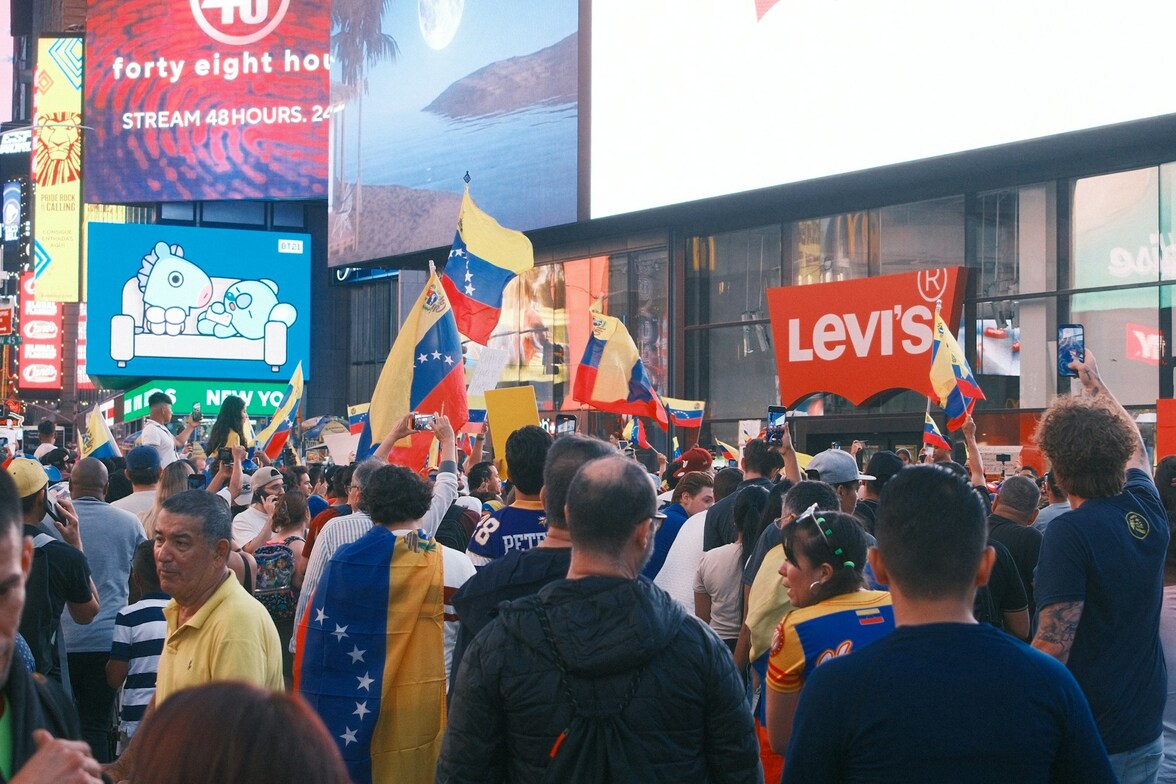
Folks have been arguing lately about reports surrounding an American military operation involving the Venezuelan president. Depending on who you listen to, the reaction could not be more different.
Some people, especially outside Venezuela, are disturbed. They see it as a violation of sovereignty, an example of Western power once again crossing borders it has no right to cross. Others, especially Venezuelans who have fled the country or watched loved ones suffer under a brutal regime, are relieved, even celebratory. For them, this is not imperial overreach. It is the removal of a tyrant who hollowed out a nation and destroyed its people.
Both reactions are understandable.
And that is precisely the problem.
We do not seem to have a clean moral category for moments like this. Justice and injustice appear tangled together. Power can look abusive and necessary at the same time. Liberation for some looks like violence to others. And the further you zoom out, the harder it becomes to say with confidence what the right response even is.
We live in a morally complicated world.
I start here because when people ask, Why did Jesus have to die, they are often assuming a much simpler moral landscape than the one we actually inhabit. If the world were basically fine, if people were basically good, then the cross would feel unnecessary, even grotesque. Why would God need something so extreme to deal with problems that seem manageable?
It is a fair objection. It deserves to be taken seriously.
Most of us do not experience ourselves as morally broken. We try to live decent lives. We care about our families. We donate when we can. We want the world to be better than it is. We do not feel like enemies of God, assuming God exists at all.
So when Christians speak about sin, salvation, and the necessity of the cross, it can feel like religious exaggeration.
But the longer I sit with the world as it actually is, the harder it becomes to maintain the idea that we are morally untouched.
Take ordinary life.
- Most of the clothes I wear were almost certainly made in factories where workers are underpaid and unsafe.
- The phone in my pocket works because minerals like cobalt are mined in conditions that involve serious exploitation, including child labour.
- The food system that keeps grocery stores stocked depends on costs that are carefully hidden from view. Farmers squeezed beyond sustainability. Land depleted. Animals raised and killed in ways most of us would find unbearable to watch.
Now I did not design these systems. Likely neither did you. We do not want people to suffer for our comfort. And yet we benefit from them every day. I don’t know about you but I don’t know how to step out of these systems without stepping out of modern life altogether.
That realization is unsettling. Not because it makes us evil, but because it makes innocence impossible.
This is where the Christian tradition speaks about sin, not as individual rule breaking, but as a shared condition. A world where harm flows through systems, histories, and habits, and where even well intentioned people find themselves complicit. We inherit this situation before we ever choose it.
And this is only part of the picture. There is also the personal side. Words spoken in anger that cannot be taken back. Silence when speaking up would have cost too much. Patterns we promised ourselves we would stop and then quietly returned to. Resentments we did not want, but could not release. If we are honest, many of us know what it feels like to be trapped inside ourselves.
Sin, in this sense, is not just something we do. It is something that does things to us. It enslaves us, even as we try to resist it.
So the question begins to shift.
Not, Why would God need a cross.
But, What would it take to heal a world like this.
Because forgiveness, when it is real, is never cheap. Anyone who has forgiven a serious wrong knows this. The pain does not vanish. Someone carries it. Reconciliation happens only when someone absorbs the weight instead of passing it back.
Now stretch that reality across nations and centuries. Across colonization, revolutions, oppression, retaliation. Human history shows us how rarely cycles of harm break on their own.
This is where the cross begins to make sense.
Christians do not believe the cross is God demanding violence. They believe it is God stepping into the violence that already exists. Entering the wound rather than standing safely outside it. Taking into himself what humanity cannot undo, repay, or repair.
There is a story recounted by Simon Wiesenthal in his book The Sunflower, a book that asks readers to wrestle honestly with the limits of forgiveness. In a later anniversary edition, many thinkers were invited to respond to Wiesenthal’s question. One of them was Archbishop Desmond Tutu.
Tutu reflects on his experience with South Africa’s Truth and Reconciliation Commission. In one case, white police officers confessed to killing Black civilians, not in war, not in self defense, but for pleasure. The families of the victims sat and listened.
History would predict rage. It would predict revenge.
Instead, many of the families said they wanted to forgive. When asked why, they said they followed a Jewish rabbi who, while being killed, forgave those killing him.
Tutu writes that in that moment he wished he had told everyone to remove their shoes, because they were standing on holy ground.
Something happened there that history does not easily explain. The cycle did not continue. It was interrupted.
So why did Jesus have to die.
Because the world we live in is not morally simple. Because harm is real and tangled and inherited. Because we are not only victims of this world, but participants in it. Because forgiveness that actually heals requires someone to carry what others cannot.
If God is love, then the cross is not an overreaction. It is love showing up in a world where anything less would be swallowed by the cycle.
I am not asking you to resolve all of this. I am not asking you to silence your questions. But if there is a love that can enter the deepest moral confusion of our world and refuse to abandon it, then I want that love to be true.
And if the cross is where that love took flesh, then this question is worth sitting with.
Not quickly.
Not defensively.
But honestly.
-
St George in the Pines Anglican Church
Contact
