Slavery, Scripture, and the Moral Weight of Christianity

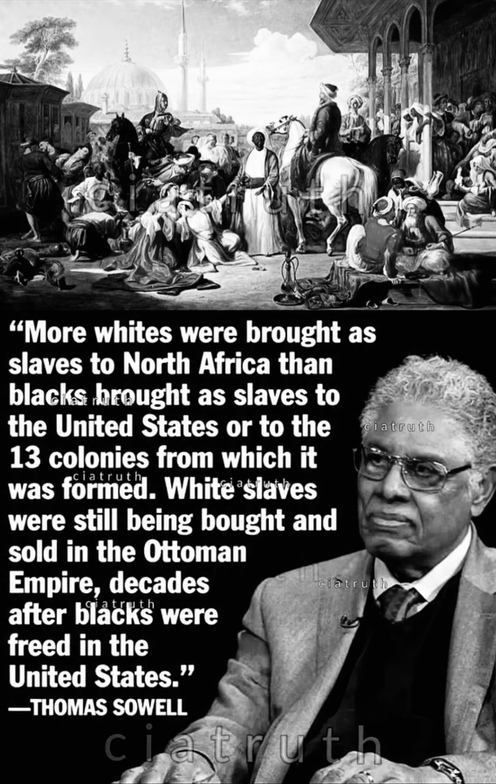
This image has been circulating again. Many readers will already have seen it before they pause to think. It usually appears with a sense of frustration. The suggestion is that the West, and especially the American context, is constantly singled out and shamed for slavery, while other civilizations that practiced slavery on a massive scale receive far less attention.
I want to offer a brief reflection on this because it’s the kind of image that encourages a knee jerk defensiveness couched in a gotcha moment that is actually quite corrosive to an honest spirituality and genuine faith. So a few thoughts in its favour before we get to the heart of the problem:
- It is important to say clearly that slavery in the American context was brutal, racialized, and deeply dehumanizing. Nothing in what follows is meant to minimize that reality. Chattel slavery was a grave moral evil, and its legacy continues to wound.
- It is also true that slavery was not unique to the West. Across history and across cultures, human beings enslaved one another.
These granted, however, do not settle the question this image raises. I think the deeper issue that the image wants to raise is not who practiced slavery, but why some traditions are judged more harshly for it than others.
Here’s why I think the West is especially targeted: the West is not scrutinized simply because it enslaved people. It is scrutinized because it claimed something better. Western societies claimed a Christian moral vision, one that affirms the full dignity of every human being. Christianity teaches that all people are created in the image of God, that no human being can rightly be reduced to property, and that in Christ the deepest divisions of status and power are overcome. When a tradition makes those claims, its failures carry a particular weight.
This is not a new take on Christianity. One of the earliest and clearest objections to slavery as an institution appears within the Christian tradition itself. In the fourth century, Gregory of Nyssa, a bishop and theologian, rejected slavery outright, not merely its abuses. Reflecting on the ownership of slaves, Gregory asked how anyone could claim authority over another human being who bears the image of God.
He wrote,
“You are condemning to slavery human beings whose nature is free and characterised by free will. You are making laws that rival the law of God, overturning the law appropriate for humankind.”
He pressed the point even further, asking,
“What price did you put on rationality? How many obols did you reckon the equivalent of the likeness of God?”
Historians widely recognize Gregory’s sermon as the first recorded wholesale rejection of slavery in human history. His argument was not economic or pragmatic. It was theological. To enslave another person was to deny what God had already declared about them.
Some other related points:
- That theological logic did not remain isolated. Over time, Christianity reshaped the moral imagination of Europe. While injustice and exploitation persisted, outright chattel slavery gradually declined across much of medieval Christian Europe and was increasingly replaced by other forms of unfree labor. This shift did not end suffering, but it did place moral limits on the ownership of human beings. Church councils increasingly restricted the enslavement of Christians, and the extension of baptism and sacramental life to enslaved people made permanent ownership harder to justify.
- Some scholars argue that this was not incidental. Sociologist Rodney Stark, in For the Glory of God, contends that Christian theology itself exerted pressure against slavery by insisting that enslaved people were full participants in the life of the Church.
- This same logic later fueled the abolitionist movements in the modern West. The abolition of slavery was not a secular inevitability. It arose from within Christian theology itself. As Esau McCaulley observes, “The widespread move to abolish slavery was a Christian innovation.”
- Rebecca McLaughlin makes a related point in noting that our modern outrage at slavery only makes sense because it rests on a moral inheritance we often take for granted. She draws attention to the work of historian Yuval Noah Harari, who argues that the modern idea of human equality is not self evident or scientifically grounded, but historically rooted in Christianity’s claim that every person possesses a divinely created soul. Harari asks what “equality” can possibly mean once that theological foundation is denied.
Here’s the point: even its critics recognize that the language of universal human dignity and equality emerged from Christian theology. When Christians violated that vision through slavery, they were judged by a moral standard their own faith had introduced into the world.
In other words, the moral energy behind abolition and human rights did not emerge from nowhere. It arose from a specific theological vision of the human person. When Christians violated that vision, they were judged by their own standard.
This helps clarify a point that the circulating image gestures toward but does not fully explain. Other religious systems did not experience the same internal pressure to abolish slavery. Since the image points to an Islamic context, a few points on that:
- In classical Islamic law, slavery was legally permitted and regulated rather than condemned as intrinsically evil. All four Sunni legal schools accepted slavery as lawful, assumed it would continue indefinitely, and provided detailed rules governing it.
- The historical record here is not controversial. Across much of the Islamic world, slavery persisted into the modern era. Abolition occurred at different times and in different places, often very late. Tunisia abolished slavery in 1846. Egypt followed in stages between 1877 and 1896. Saudi Arabia abolished slavery in 1962. Mauritania did not formally abolish it until 1981, and did not criminalize it until 2007.
- Crucially, abolition did not arise from internal theological movements comparable to Christian abolitionism. As historian Bernard Lewis notes, “There is no provision in Islamic law for the abolition of slavery, nor any hint that such a thing was ever contemplated.”
- He is even more explicit elsewhere: “The institution of slavery was accepted and regulated by the holy law. The notion that slavery was morally wrong and should be abolished was unknown.”
- Islamic law permitted and regulated slavery while encouraging manumission in limited cases. But manumission does not challenge slavery as such. It assumes the system is lawful and enduring, offering relief within it rather than a reason to dismantle it.But manumission is not abolition. As historian Ehud Toledano explains, “Manumission was never understood as a step toward ending slavery itself, but as part of a system that presupposed its permanence.”
So why did abolition eventually occur? The scholarly consensus is clear. Abolition in Islamic societies was driven primarily by Western diplomatic, economic, and political pressure, not by internal religious reform. Toledano writes, “Abolition was imposed from above, usually under European pressure, and was not the result of internal social movements.”
William Clarence Smith concurs, noting that “The end of slavery in Muslim societies owed far more to colonial intervention and international pressure than to any rethinking of Islamic doctrine.”
This is not about moral scorekeeping or denigrating individuals of other faiths. It is about recognizing that not all moral systems contain the same internal resources. Christianity condemns itself when it fails because it teaches something better. The anger directed at Christianity for slavery is not simply an attack. It is an acknowledgment that Christianity claims a vision of human dignity that slavery violates at its core.
McLaughlin puts it plainly. “Rip that Christian foundation out, and you will not uncover a better basis for human equality and rights. You will uncover an abyss that cannot even tell you what a human being is.”
This image should not make Christians defensive. It should make us sober. Our faith leaves us without excuses. It calls us to know our history, to tell the truth about it, and to live in ways that actually reflect what we confess.
The real scandal is not that Christianity is criticized for slavery. The real scandal is that Christians ever tried to make peace with it at all.
-
St George in the Pines Anglican Church
Contact
